Feature Work
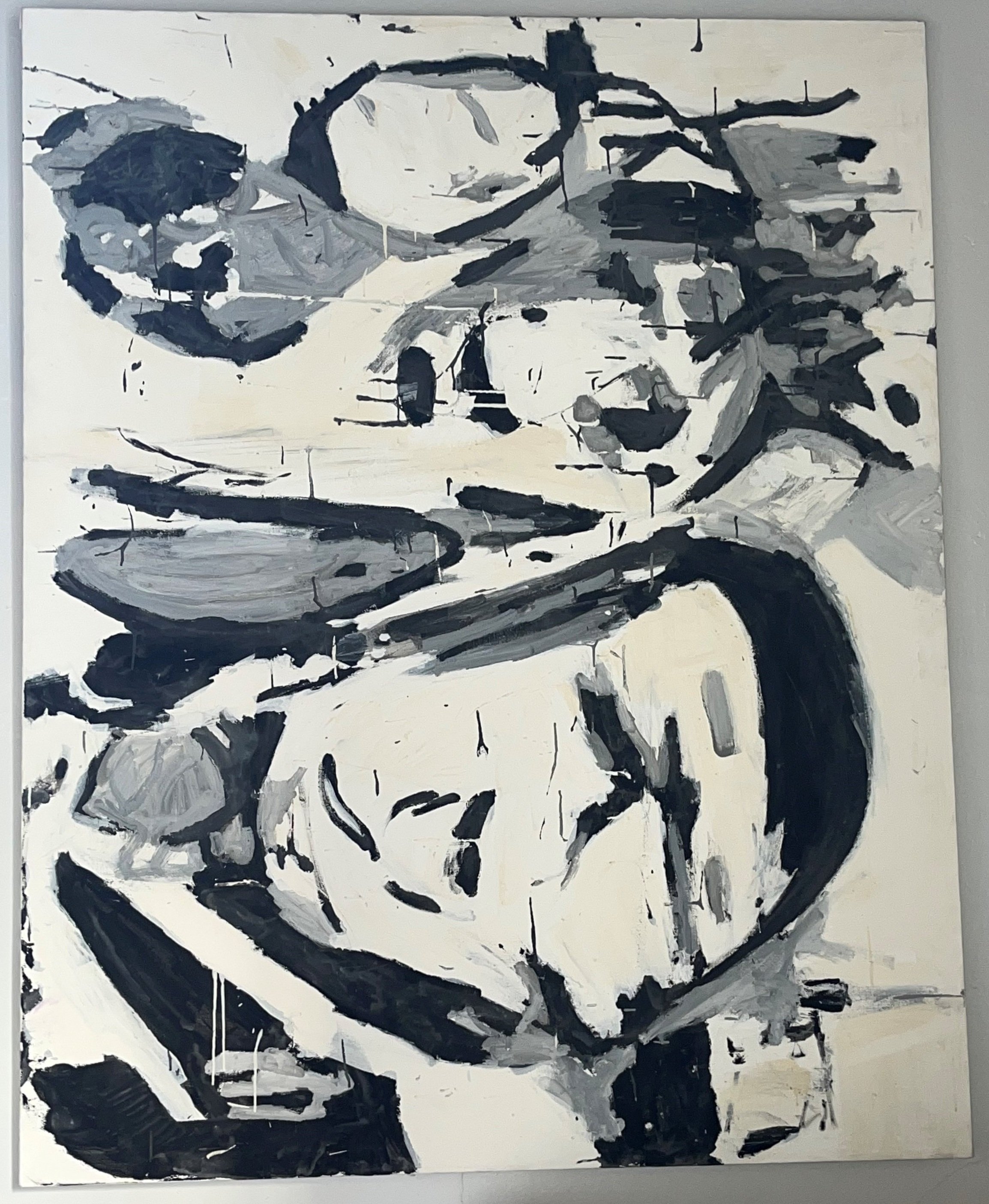
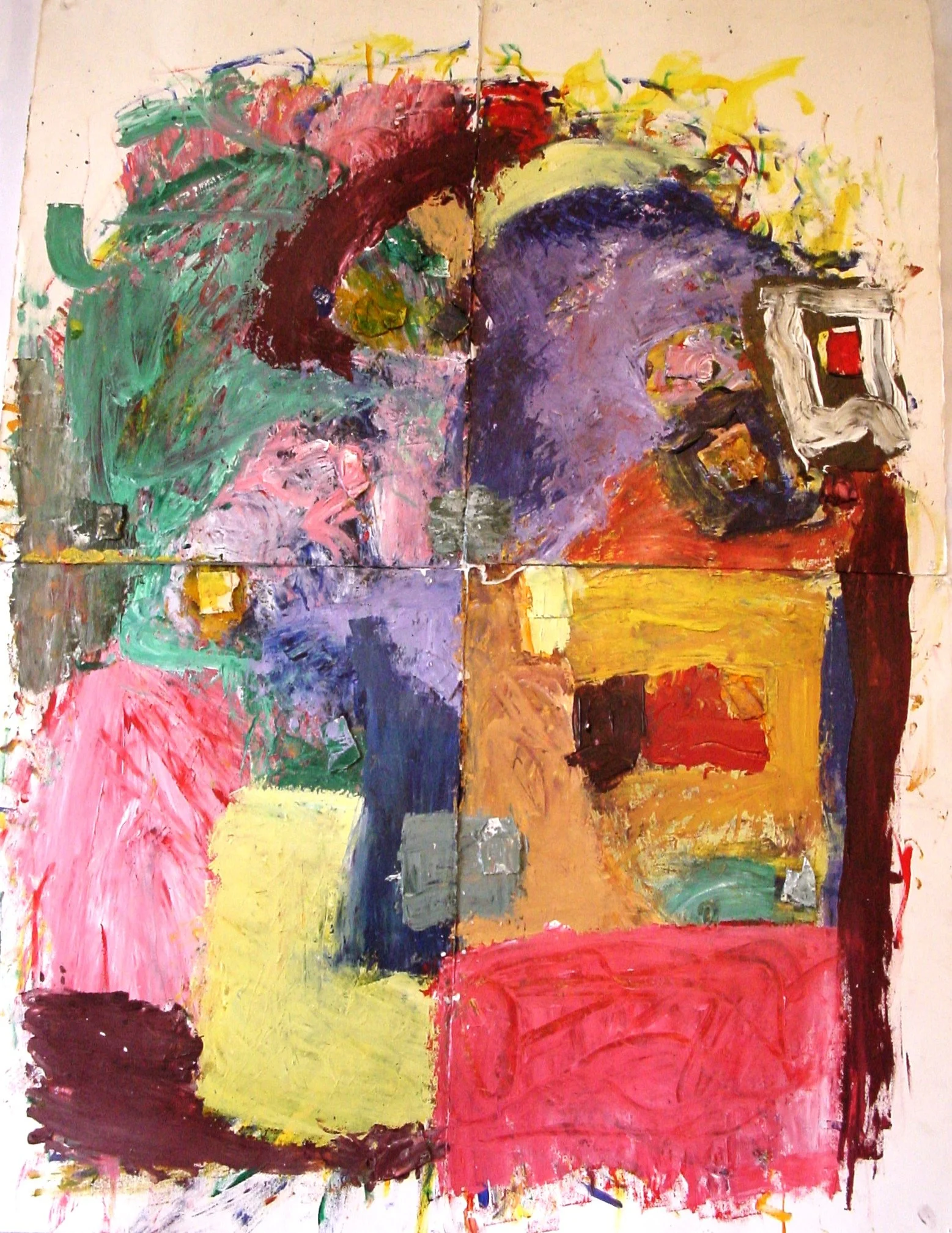
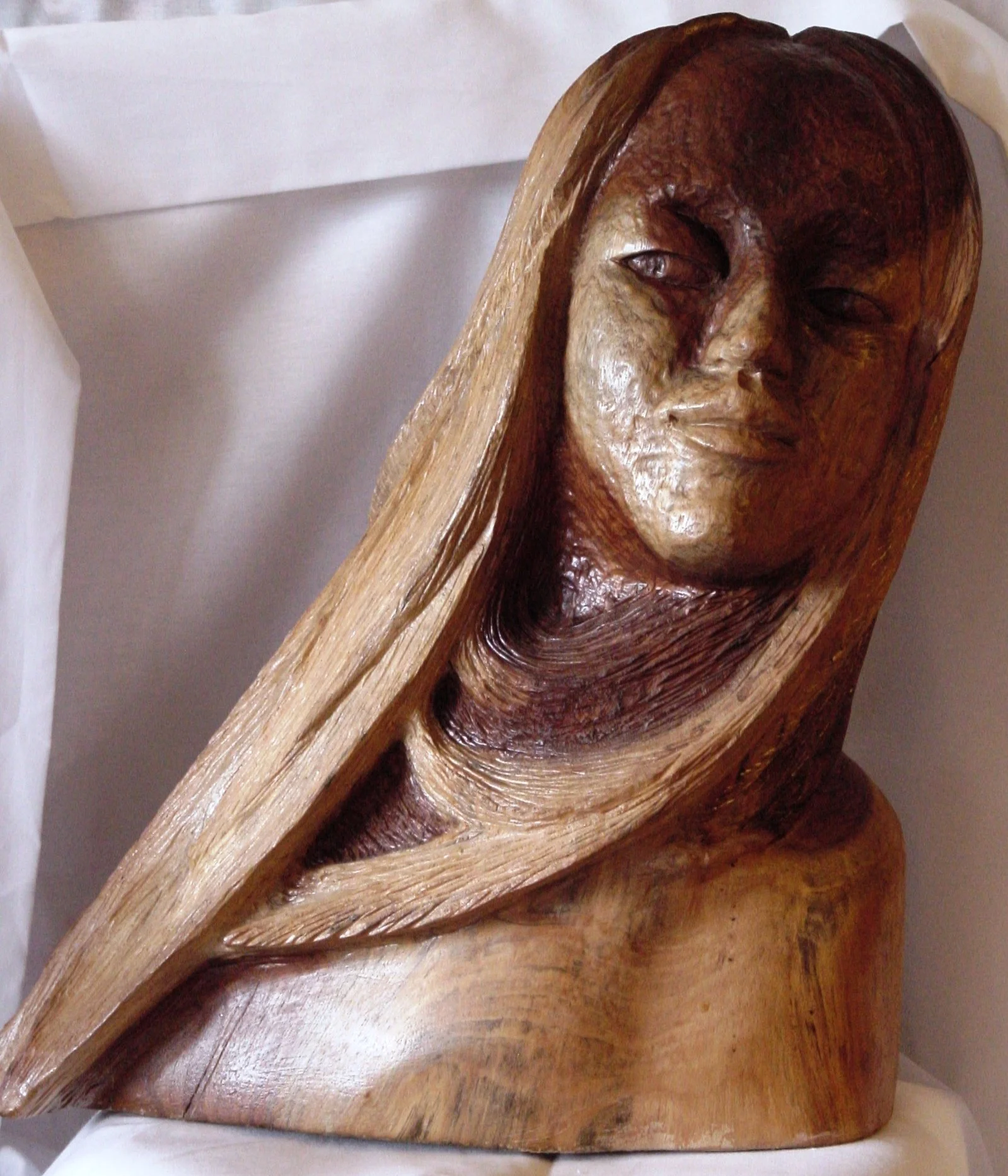
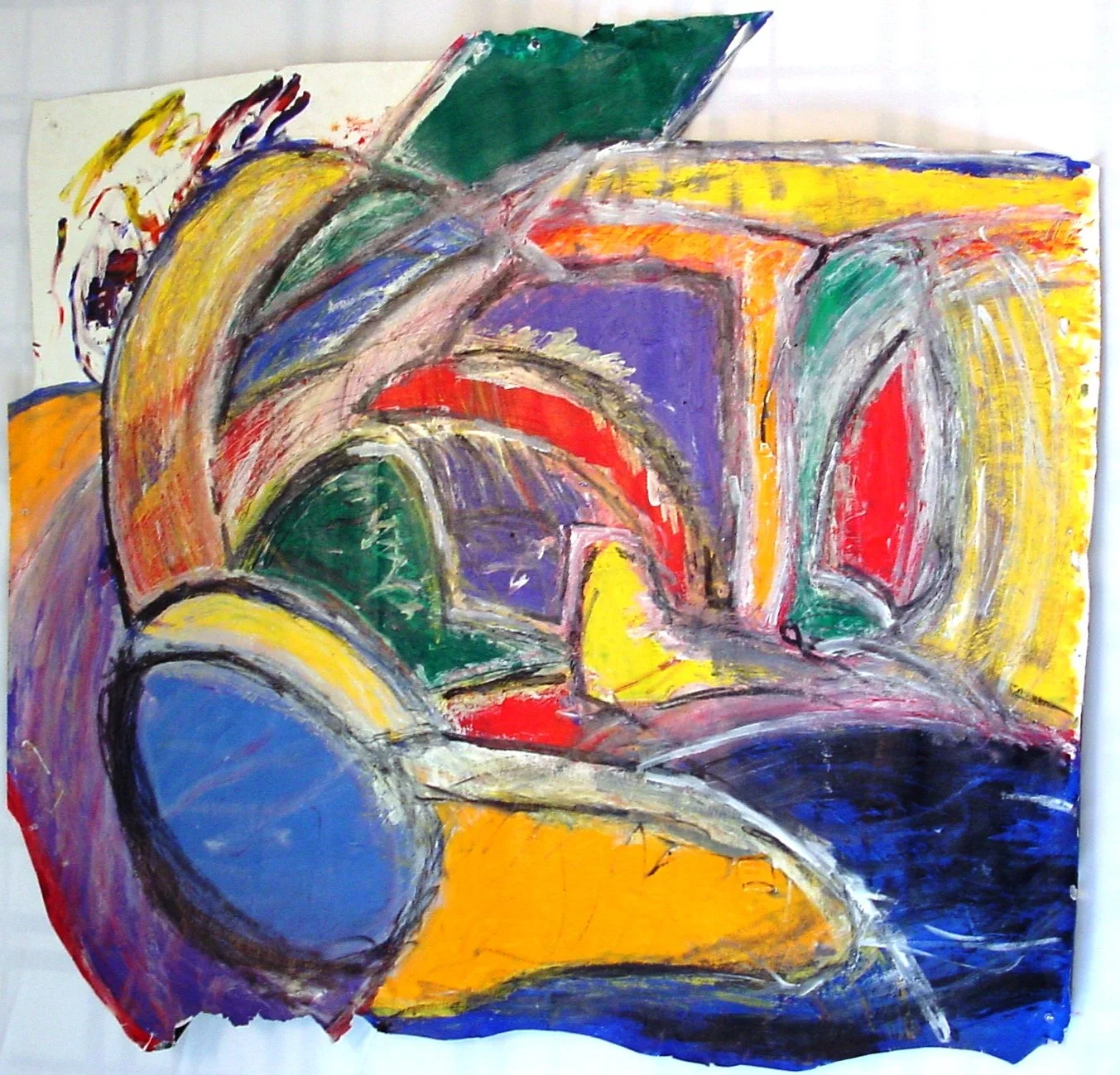
This Section of Austin’s Portfolio represents transitional and inspirational works created over his artistic development. This section features early work along with some of the most recent works with a brief artist staments on several of the pieces displayed below.
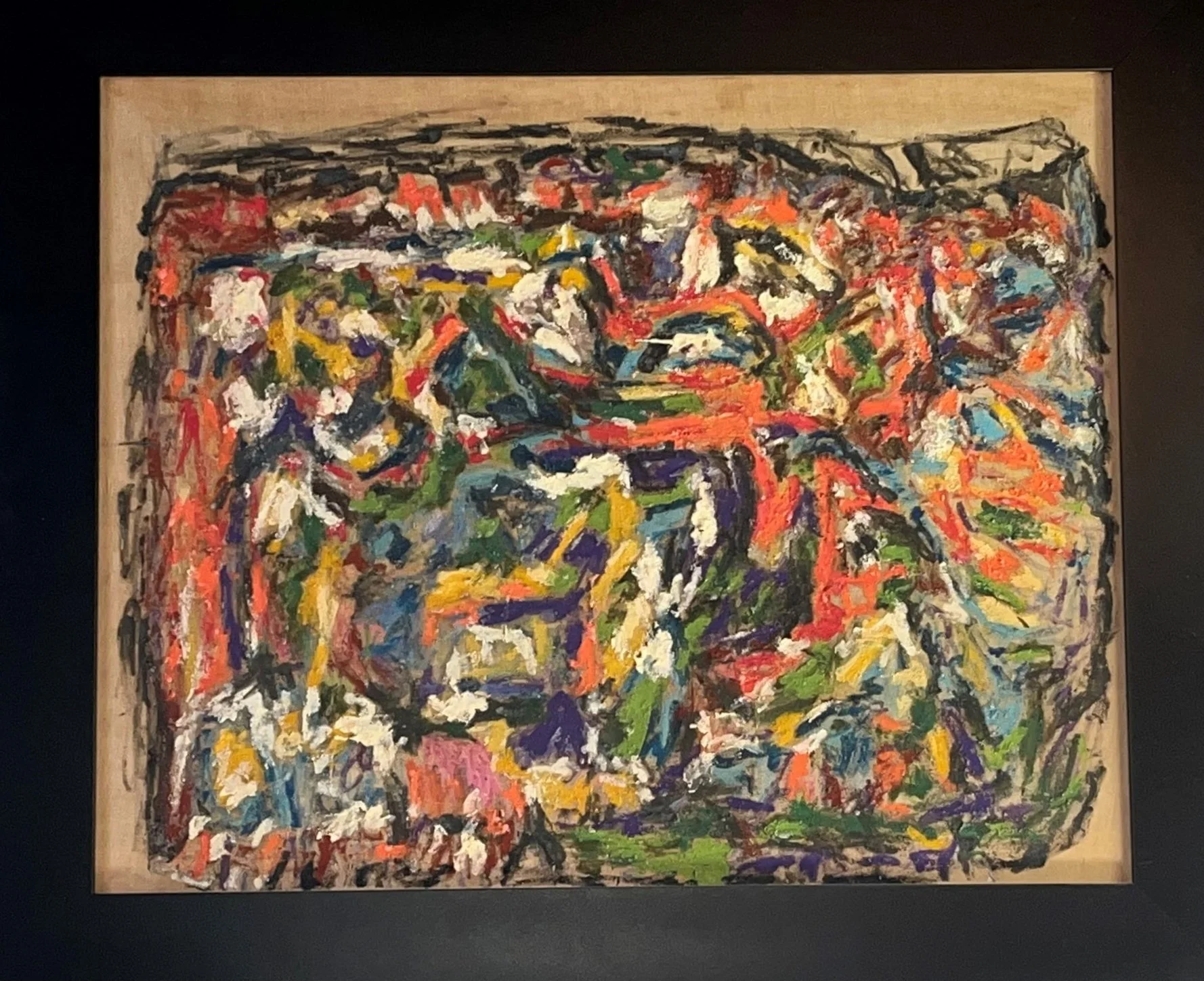
Untitled, Egg Tempera on Linen This piece marks a pivotal moment in Austin Center's artistic journey, created shortly after moving to New York City. At the time, Austin was working at William Doyle Galleries, where a patron gifted him this stretcher after the original painting it supported was deemed of little value. Around the same time, while assisting in clearing out the education wing of the American Craft Museum, Austin acquired this piece of unprimed linen. Without traditional paints on hand one night, Austin recalled his training in Florence, Italy, where he learned the ancient technique of making egg tempera – a method dating back to the Renaissance. Crushing pastels and binding them with egg yolks, he crafted his own richly pigmented paints, layering texture and color into this piece. This process, first explored in his art school days in Italy, continues to be a foundational element of his work today, reflecting his commitment to craftsmanship and the tactile qualities of his materials.
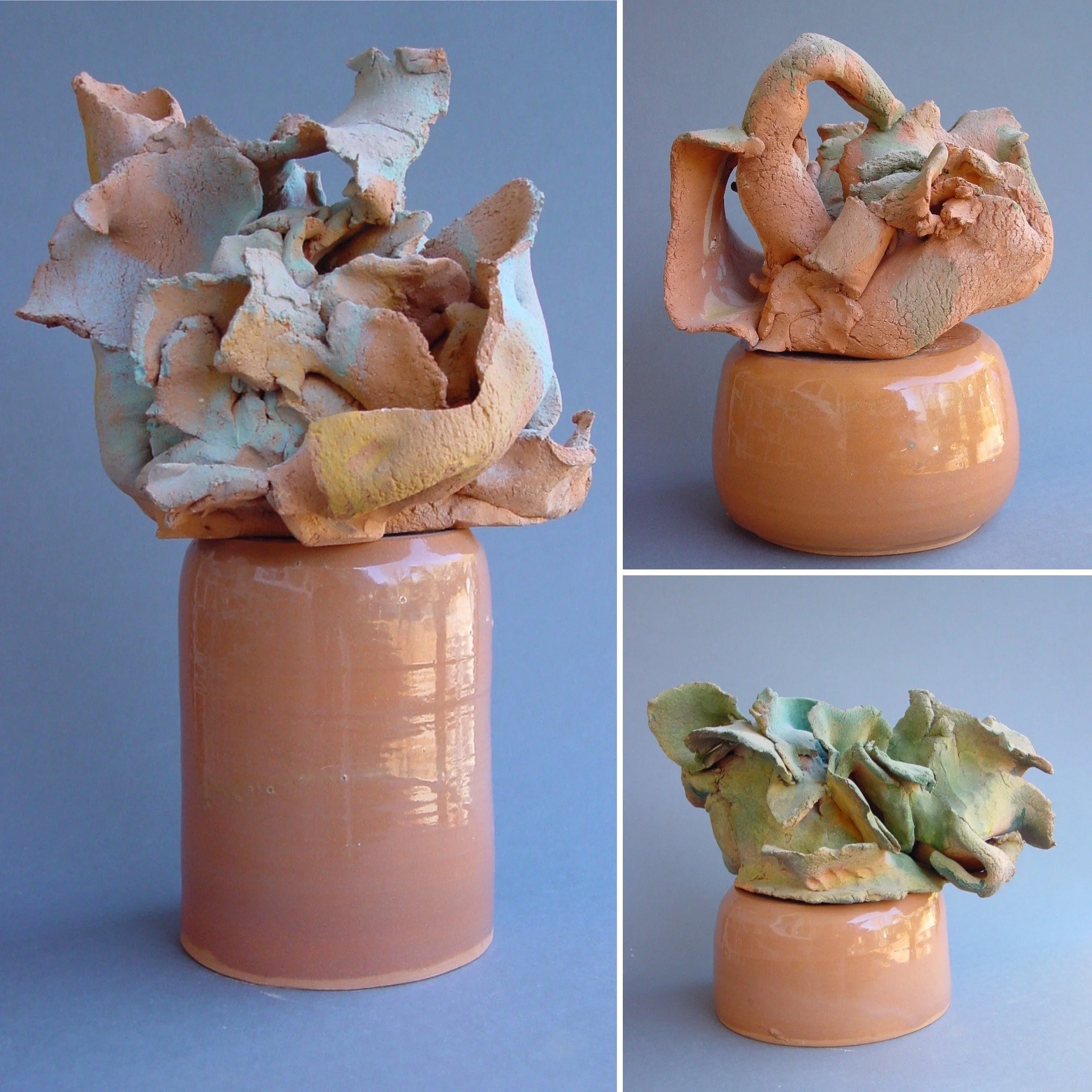
Untitled Ceramic Sculpture This piece marks a turning point in Austin Center's artistic evolution, rooted in a pivotal moment during his studies at the Studio Arts College International (SACI) in Florence, Italy. One day, his ceramic professor challenged him with a provocative question: "When I look at your paintings, I see freedom, expression, energy. Why can't you capture that same spirit in your ceramics?" Inspired by this critique, Austin returned to the studio and reconsidered his approach. He took three functional, wheel-thrown pottery forms, flipped them over, and began building organic shapes and spontaneous forms directly onto their surfaces. This breakthrough marked the beginning of his journey into ceramic sculpture – a path that continues to shape his work today, merging the expressive energy of his paintings with the tactile immediacy of clay.
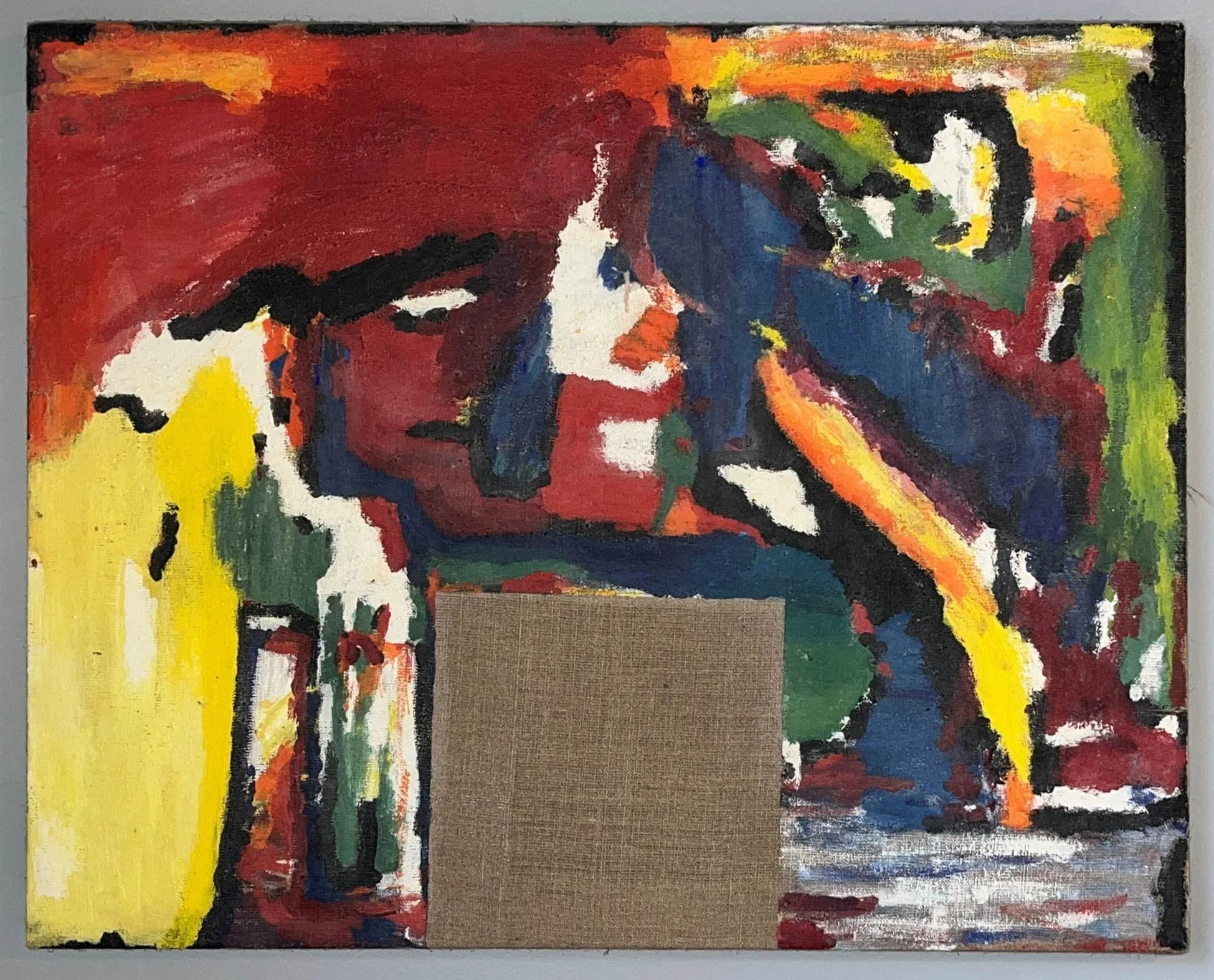
SoHo, September 2001 – Mixed Media on Canvas This piece holds a deeply personal significance for Austin Center, capturing a moment forever etched into his memory. On September 11, 2001, Austin was teaching art in a park at the corner of Spring and Thompson in SoHo, Manhattan. He vividly recalls the sound of planes flying low overhead and the collective gasp that rippled through the air as the first tower collapsed – a moment that felt like the air being pulled from the city itself. In the days that followed, Austin returned to his studio, seeking solace in creation. This painting emerged as an emotional response to the chaos and loss that surrounded him, serving as both a personal reflection and a tribute to those who lost their lives and those who risked theirs to save others. The layered textures and raw, expressive marks capture the profound mix of grief, resilience, and humanity that defined that moment.
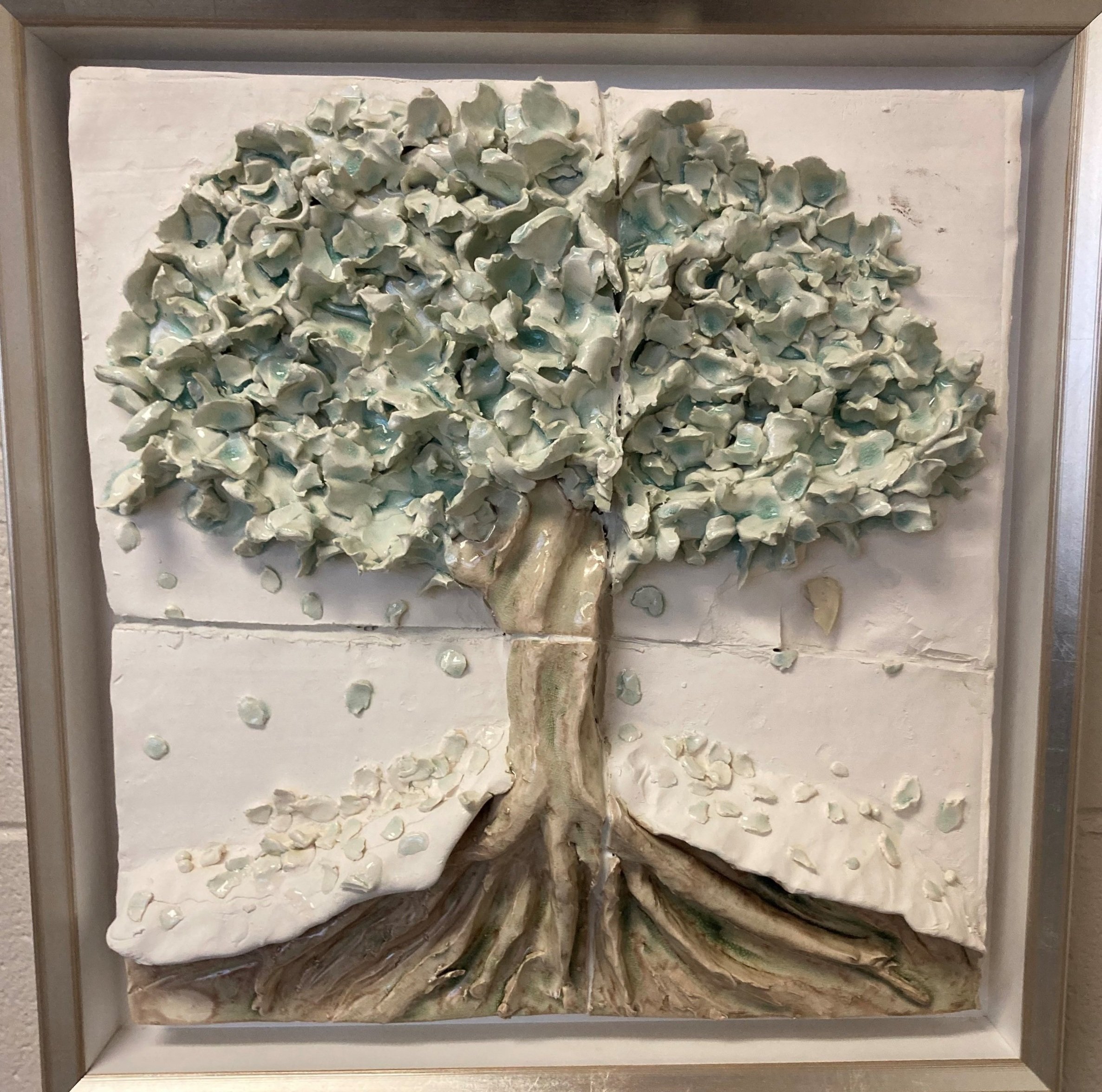
Tree of Life – Ceramic Wall Sculpture Series In the spring of 2020, Austin Center was commissioned to create a piece for the new Kindertransport Chapel at Mizpah Congregation in Chattanooga, Tennessee – a sacred space honoring the courageous children saved through the Kindertransport before the Holocaust. Working with clay under tight deadlines, Austin crafted not one, but three unique wall sculptures for this project. Understanding the unpredictable nature of the ceramic firing process, he created multiple pieces to ensure the survival of at least one. Remarkably, all three sculptures emerged unscathed from the kiln, each a testament to resilience and the power of remembrance. These pieces were inspired by words provided by the donor family, whose mother was saved by the Kindertransport: “From those tiny seeds have grown trees. Each generation giving life to roots, branches, and leaves – honoring those that were lost, but who never will be forgotten.” One of these sculptures now holds a place of permanent honor in the Kindertransport Chapel, where it serves as a living testament to survival and the strength of memory. Another was auctioned at ORT South Africa, with proceeds supporting international humanitarian efforts for Afghan women refugees. The third remains in the artist’s personal collection – a deeply cherished piece representing a legacy of hope and endurance.
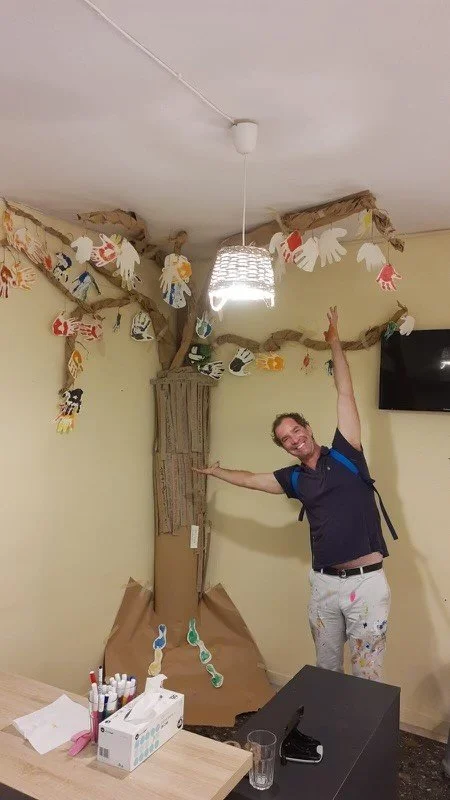
Tree of Life – Collaborative Installation, Thessaloniki, Greece In the summer of 2022, Austin Center traveled to Thessaloniki, Greece, to create a powerful, community-driven art installation titled Tree of Life at the Irida Center – a nonprofit supporting women refugees from Africa, Afghanistan, Syria, Iran, Ukraine, and other conflict-ridden regions. This project, a celebration of resilience and connection, earned national recognition, winning the 2024 Cam Bush Award for Art in Resilience from the National Organization for Arts in Health (NOAH). The installation transformed the center’s entrance into a living, evolving artwork. Each participant wrote their names and their families' names on strips of cardboard in their native languages, representing the roots of their heritage. Handprints, symbolizing the branches and leaves, and footprints, embodying the grounding strength of their roots, came together to form the Tree of Life. This ongoing project is part of a broader series of Tree of Life installations that Austin has created around the world, including works in Ashdod, Israel, and Chicago, Illinois – each installation a lasting testament to the power of resilience, community, and the shared human journey.
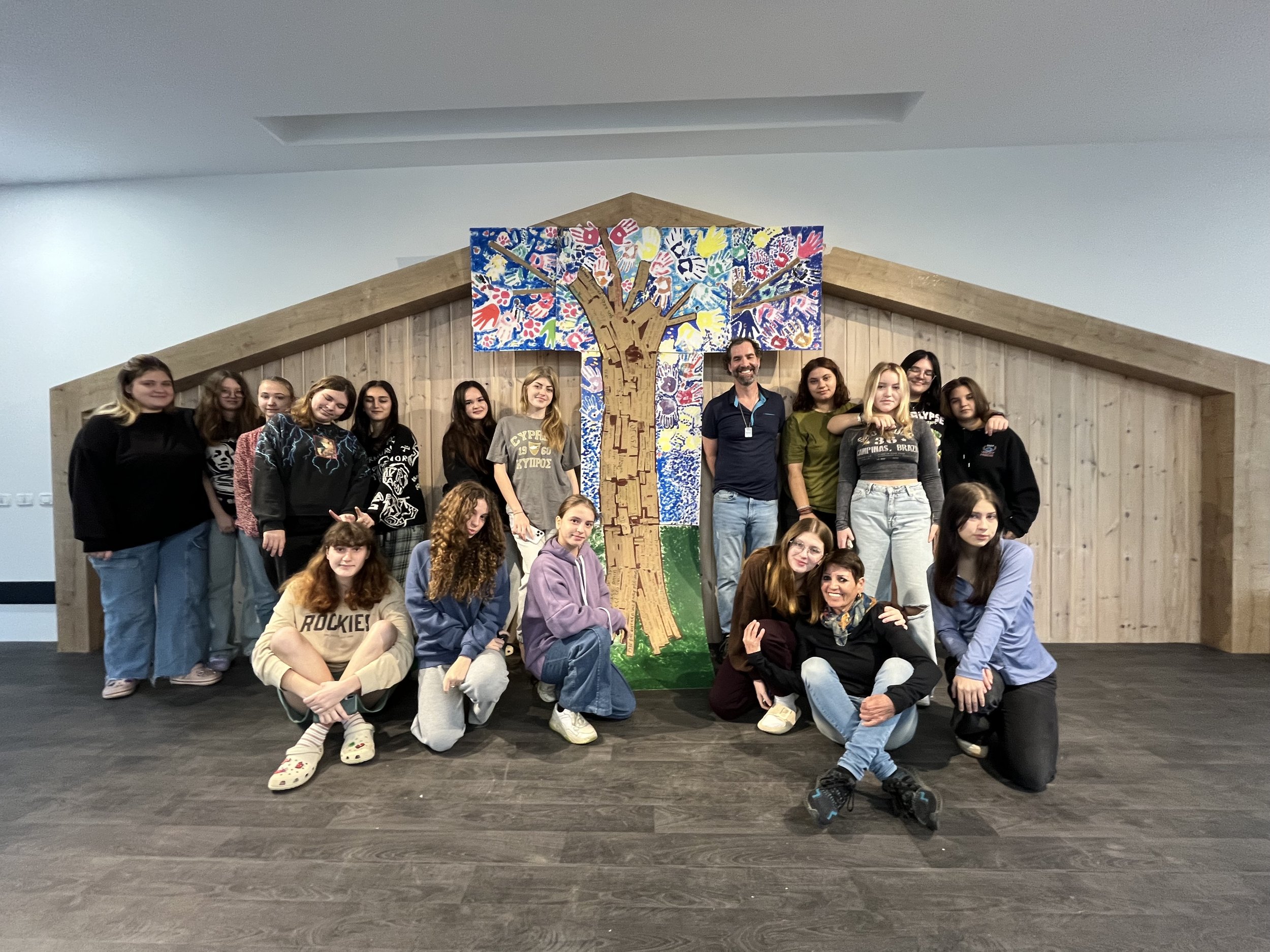
Tree of Life – Collaborative Installation, Kfar Silver, Israel (2024) In January 2024, Austin Center traveled to Israel as part of a solidarity mission, continuing his Tree of Life installation series. At the World ORT Youth Village Kfar Silver, Austin collaborated with students to create a vibrant, collective artwork that draws on the same themes of resilience and remembrance that have defined his Tree of Life projects around the world. Inspired by the first Tree of Life sculpture he created for the Kindertransport Chapel at Mizpah Congregation in Chattanooga, Tennessee, this installation symbolizes the enduring strength of community and the deep roots of heritage. The original piece, commissioned in 2020, was inspired by the following words from the donor family, whose mother was saved by the Kindertransport: "From those tiny seeds have grown trees. Each generation giving life to roots, branches, and leaves – honoring those that were lost, but who never will be forgotten." Building on this legacy, the students at Kfar Silver contributed their handprints as the leaves, their fingerprints as the sky and grass, and their names, written in their native languages, as the bark of the tree – each mark representing a unique story of resilience and hope. The finished piece now hangs proudly in the cafeteria at Kfar Silver, a living testament to the power of connection, community, and the human spirit. This project is part of a broader series of Tree of Life installations that Austin has created around the world, including works in Thessaloniki, Greece, Ashdod, Israel, and Chicago, Illinois – each a powerful reminder that from even the smallest seeds, entire forests can grow.
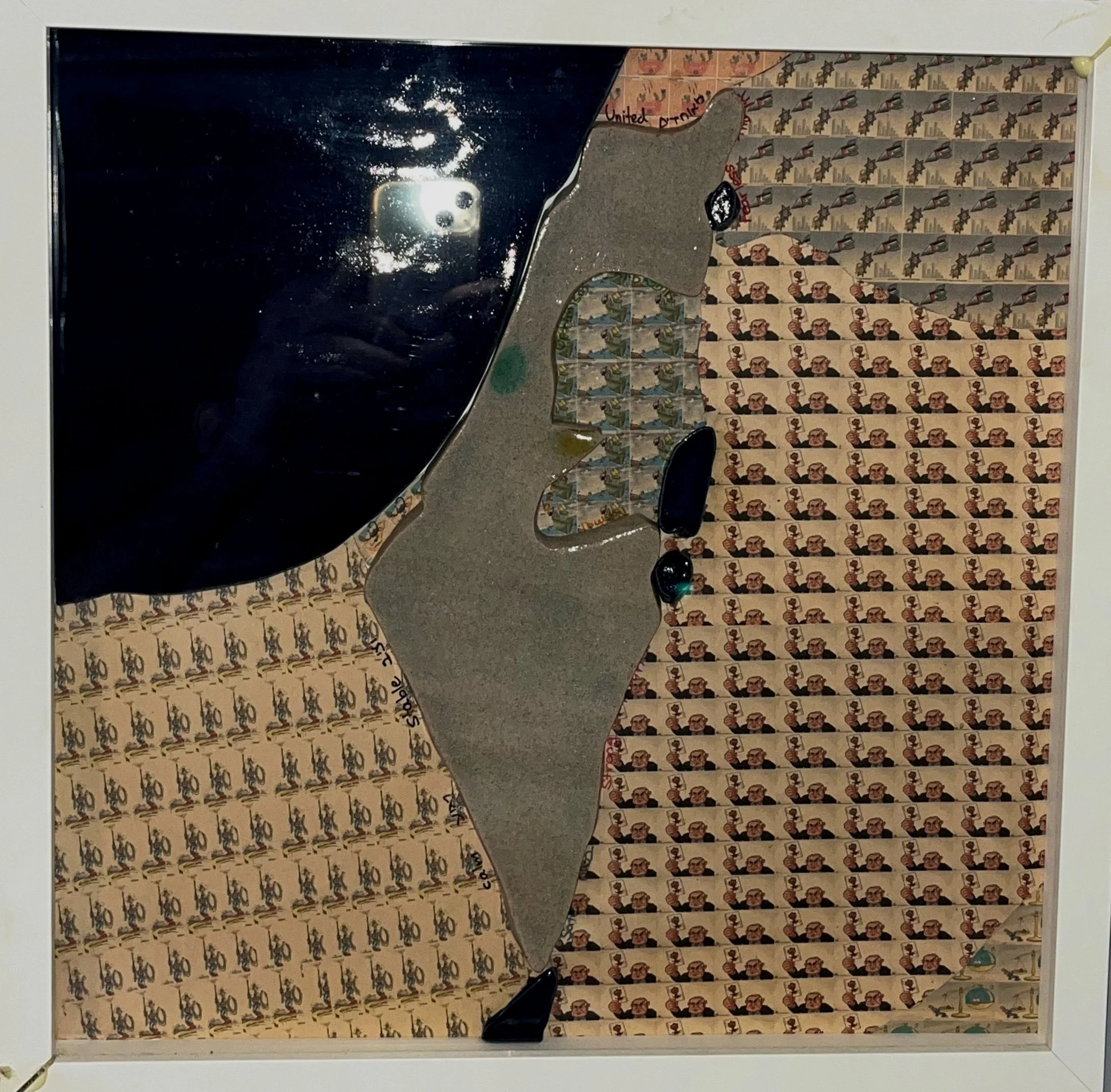
Title: יעקב (Jacob) Statement: "Our Stable Bubble Among All the Madness" – Hadas Peled Media: Mixed Media – Clay and Newsprint (Political Cartoons from Arab Newspapers) Artist Description of the Work: יעקב (Jacob) draws its name from the artist's Bar Mitzvah Torah portion, the story of Jacob wrestling with the angel in Genesis – a transformative struggle that ultimately leads to the birth of Israel. This piece uses clay, a material formed through the weathering of water and earth under immense pressure, as a symbolic representation of the land of Israel itself – enduring, resilient, and deeply rooted. The clay forms the physical land of Israel, a symbol of permanence and strength, while the surrounding waters – represented by layers of newsprint featuring political cartoons from Arab newspapers – capture the turbulent, often conflicted perspectives of the region. These printed layers, like the currents they depict, are designed to fade over time, reflecting the hope that the hostility they represent may also one day dissolve. The piece reflects three distinct perspectives: the artist's own as a Jewish American, the broader Arab view of Israel captured in the cartoons, and the personal reflections of a young Israeli who contributed the phrase "Our Stable Bubble Among All the Madness" – a poignant reminder of the resilience required to maintain peace and stability in a complex and often chaotic world. This work, like the land it represents, is a testament to endurance, transformation, and the hope for a lasting peace, even amid the relentless pressure of time and conflict.